Let’s get one thing straight: Liverpool didn’t just create the Beatles. It took a crumbling, neon-soaked red-light district in Hamburg, a city still scarred by Allied bombs, to hammer them into shape. The story of four scruffy kids from Liverpool becoming the defining cultural force of the 20th century isn’t just a tale of talent. It’s a lesson in how desperation, sleazy clubs, and 8-hour sets can turn a mediocre band into legends. And it all started with a lie.
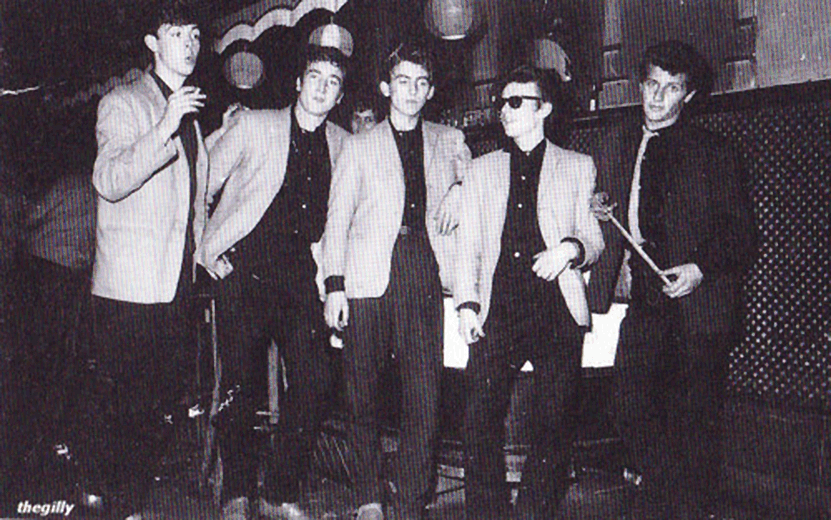
In August 1960, the Beatles, then a five-piece with bassist Stuart Sutcliffe and drummer Pete Best-arrived in Hamburg after their manager, Allan Williams, fibbed to German club owner Bruno Koschmider about their experience. Koschmider wanted a rock ‘n’ roll band for his Indra Club, a former strip joint on the Reeperbahn. What he got were teenagers who could barely play their instruments. John Lennon was 19, Paul McCartney 18, and George Harrison-who’d lied about his age to get a work permit-was just 17. Their digs? A windowless storage room behind a Bambi Kino porn cinema, where they slept on lice-infested mattresses between rat sightings.
The Boot Camp of Rock ‘n’ Roll
Hamburg didn’t care about their inexperience. The city demanded stamina. Six hours a night, seven days a week, playing to crowds of sailors, sex workers, and art students hopped up on Preludin-German diet pills the band swallowed like candy to stay awake. “We had to learn millions of songs,” Harrison later said, “because we’d be on for hours. We’d even play “Somewhere Over the Rainbow” just to kill time”. This wasn’t a gig; it was survival.
The pressure forged their sound. Lennon’s voice grew raw from shouting over the din. McCartney mastered bass lines by watching Sutcliffe fumble. Harrison, the “baby” of the group, sharpened his guitar solos under the glare of German crowds who’d boo if they slacked. By their second Hamburg stint in 1961, they’d dropped ballads for raucous covers of Little Richard and Chuck Berry, stitching together a sound that fused rockabilly punch with punk energy.
The Art School Connection (and the Haircut That Changed Everything)
Enter Astrid Kirchherr, a 22-year-old photographer with a Klaus Kinski stare and a Beatle haircut before the Beatles had one. She wandered into the Kaiserkeller club in 1960, drawn by the “sex and sweat” of their performance, and became obsessed. Her photographs, moody, chiaroscuro portraits of the band in leather jackets-are the first great images of rock ‘n’ roll as art, not just entertainment.
But her real legacy was Stuart Sutcliffe’s haircut. Sutcliffe, Lennon’s art school friend, was the first to let Astrid chop his greased-up quiff into the tousled “mop top” that would define the Beatles’ look. Harrison followed, then Lennon and McCartney-reluctantly. “We thought we looked like fools,” McCartney admitted, but the style became their trademark, setting off a global fashion craze.
Sutcliffe’s tragic exit-he left the band in 1961 to study art, only to die of a brain hemorrhage months later-cemented Hamburg’s role as both incubator and ghost. His death haunted Lennon, who later said, “I grew up in Hamburg, not Liverpool”.
From Cellar to Scream: The Birth of Beatlemania
By 1962, the Beatles were Hamburg veterans, but their final residency at the Star-Club coincided with a seismic shift. Returning with Ringo Starr (who’d drummed there with Rory Storm and the Hurricanes), they were now tight, loud, and dripping with stagecraft. They’d learned to perform–Lennon hunched over the mic like a snarling preacher, McCartney bouncing on his heels, Harrison flipping his guitar like a cowboy drawing a pistol. When they unleashed “Twist and Shout,” crowds rioted. This wasn’t just music; it was chaos with a backbeat.
Hamburg also gave them their first taste of recording. As Tony Sheridan’s backing band on “My Bonnie,” they caught the ear of Brian Epstein, the Liverpool record store owner who’d become their manager. Without that scratchy single, the Beatles might’ve remained a local oddity.
Liverpool’s Debt to Hamburg
So why does this matter to Liverpool? Because the Beatles’ Hamburg grind didn’t just shape them-it redefined the city’s musical identity. Their success proved that Liverpool bands could go global, sparking the Merseybeat boom. Gerry & the Pacemakers, The Searchers, and Cilla Black followed, turning the Cavern Club into a pilgrimage site.
Yet Hamburg’s influence lingers in Liverpool’s DNA. The Cavern’s brick-walled intimacy echoes the Kaiserkeller’s sweatbox energy. Bands like The Wombats and The Coral still talk about the “Hamburg test”-if you can survive a week of gigs there, you’re ready for anything. Even today, Liverpool’s music scene thrives on that same blend of grit and ambition.
The Echoes in “A Hard Day’s Night”
You can’t talk about the Beatles’ Hamburg days without mentioning A Hard Day’s Night (1964), the film that bottled their anarchic energy. Directed by Richard Lester, it’s a fictionalized romp through Beatlemania, but its DNA is pure Hamburg. The opening chord of the title track-a jarring G7sus4-mirrors the adrenaline of their German sets. The madcap chase scenes? That’s the Reeperbahn’s chaos distilled into comedy.
Lester’s almost guerrilla filming style, using handheld cameras and jump cuts, mirrored the Beatles’ own scrappy beginnings. When they mock a pompous TV director (Victor Spinetti), it’s a nod to the Hamburg crowds who’d heckle them into greatness. The film’s climax-a screaming concert-is Hamburg’s sweat-soaked euphoria repackaged for the world.
The Lesson for Liverpool Today
Liverpool’s music scene in 2025 is a world away from 1960s Hamburg, but the stakes feel familiar. Venues face the same threats that once shuttered the Kaiserkeller: rising rents, noise complaints, and a culture that treats art as disposable. The difference is, today’s artists have a blueprint.
The Beatles didn’t just play Hamburg; they stole from it. They took the city’s hunger, its danger, and its relentless work ethic, then gave it back as art. That’s Liverpool’s challenge now: to protect the spaces where tomorrow’s Beatles can grind, fail, and reinvent themselves. Because the next great band isn’t being forged in a Spotify algorithm. They’re in a basement somewhere, playing a four-hour set to five drunks, wondering if anyone will ever care.
Hamburg taught the Beatles to care. And Liverpool taught them to make us listen.
Posted from the SFN Archives.
 SOUNDS FROM NOWHERE
Leave a comment