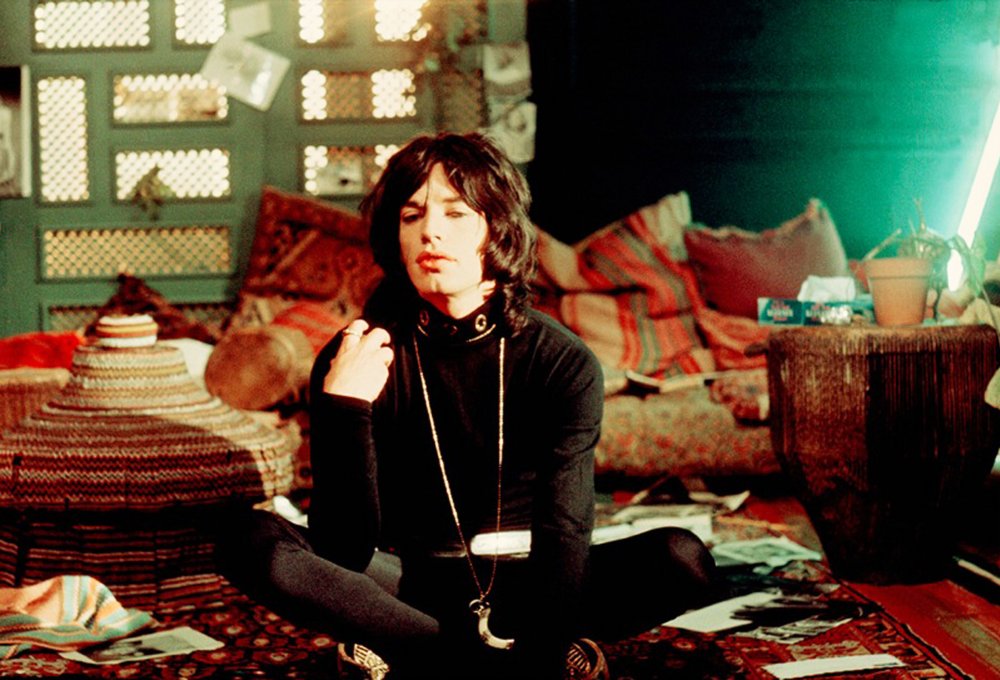
In the pantheon of rock star cinema, there are those who dabble, those who try, and those who become the role. Mick Jagger‘s turn in the 1970 cult classic “Performance” falls squarely into the latter category. It’s a film that almost broke the Rolling Stones, scandalized Warner Bros., and launched Jagger into a new stratosphere of fame.
Ever since I can remember, I’ve been personally attracted to rockstars leading a fish-out-of-water double life with a starring role in some motion picture, it’s happened almost forever from Johnny Rotten taking on Harvey Kietel in Copkiller to Harry Styles stealing his scenes in Dunkirk, it’s happened before and will always happen.
However, the beauty of it is when an wannabe-actor actually collapses in the role.
In 1965, filmmaker Donald Cammell concieved his latest idea, a meant-to-be harmless swinging 60s title The Performers and even tried to latch onto Marlon Brando for the leading role. He developed it with Warner Bros. keeping close-by, and eventually came to the idea that they’d make an answer to The Beatles‘ A Hard Days Night (1965) by wrangling in their hottest rivals (no, not the Monkees), The Rolling Stones.
While The Stones didn’t want any part, their dancing leader Mick Jagger wanted a lead role, and was given it. Marlon Brando became disillusioned and London actor James Fox stepped up.
However, Cammell‘s flirtation with madness as a theory created a dark turn for the picture in 1967. His vision for the film skewed left, with him crafted a highly experimental, violent and overly sexual film on Warner Bros. time.
Now of focusing on the idea that gangland killer James Fox hides away in the home of reclusive rocker Mick Jagger, the film drove with all intentions of disruption. Warner Bros., understandably, got cold feet.
After all, they’d signed up for a light-hearted romp, not a cinematic descent into the abyss of identity and sexuality. The studio’s trepidation only grew as Cammell, fuelled by a growing reliance on LSD and a burgeoning obsession with the occult, pushed the boundaries of what was considered acceptable on screen.
The final product, now simply titled “Performance,” was a far cry from the studio’s expectations. It was a whirlwind of psychedelic imagery, graphic violence, and unapologetic sexuality that challenged the very notions of identity and morality. Jagger, in his acting debut, was mesmerizing as the enigmatic Turner, a rock star lost in a haze of drugs and decadence. His performance was a revelation, capturing the essence of a generation teetering on the edge of chaos.
Fox, meanwhile, delivered a tour-de-force as Chas, the violent gangster who finds himself drawn into Turner‘s twisted world. His transformation from a hardened criminal to a man questioning his very existence was both unsettling and captivating.
The film’s release in 1970 was met with critical disdain and commercial indifference. It was too shocking, too experimental for mainstream audiences. The studio, fearing a backlash, buried the film, limiting its distribution and ensuring its failure at the box office.
However, as the years passed, Performance found a new audience. It became a cult classic, embraced by those who saw it as a daring and innovative work of art. Its influence could potentially be seen in everything from David Bowie‘s Ziggy Stardust persona to the rise of punk rock.
For Jagger, Performance was a turning point. It solidified his status as a cultural icon, a man who defied expectations and embraced the dark side of fame. The film’s legacy continues to grow, its influence felt in every corner of popular culture. It stands as a testament to the power of art to challenge, provoke, and ultimately, endure.
For those who dare to delve into the depths of its madness, Performance is available on various streaming platforms and physical media, a flickering reminder of a time when rock stars were more than just musicians, they were agents of chaos, harbingers of a cultural revolution.
 SOUNDS FROM NOWHERE
Leave a comment